Custom Espadrilles: A Private-Label Sourcing Guide
Espadrilles are a useful category for private-label brands because a familiar slip-on silhouette can be adapted through material, color, construction and packaging. The challenge is not simply finding an espadrille manufacturer. It is defining a product brief that gives the factory enough information to quote accurately, make a reliable sample and reproduce the approved design at bulk scale.
This guide explains the decisions that matter when sourcing custom espadrilles: upper materials, jute and outsole construction, color development, branding, packaging and supplier communication. It is written for brand buyers, importers and retailers planning a private-label footwear program rather than for a one-pair retail purchase.
Start With the Product Brief, Not the Sample Request
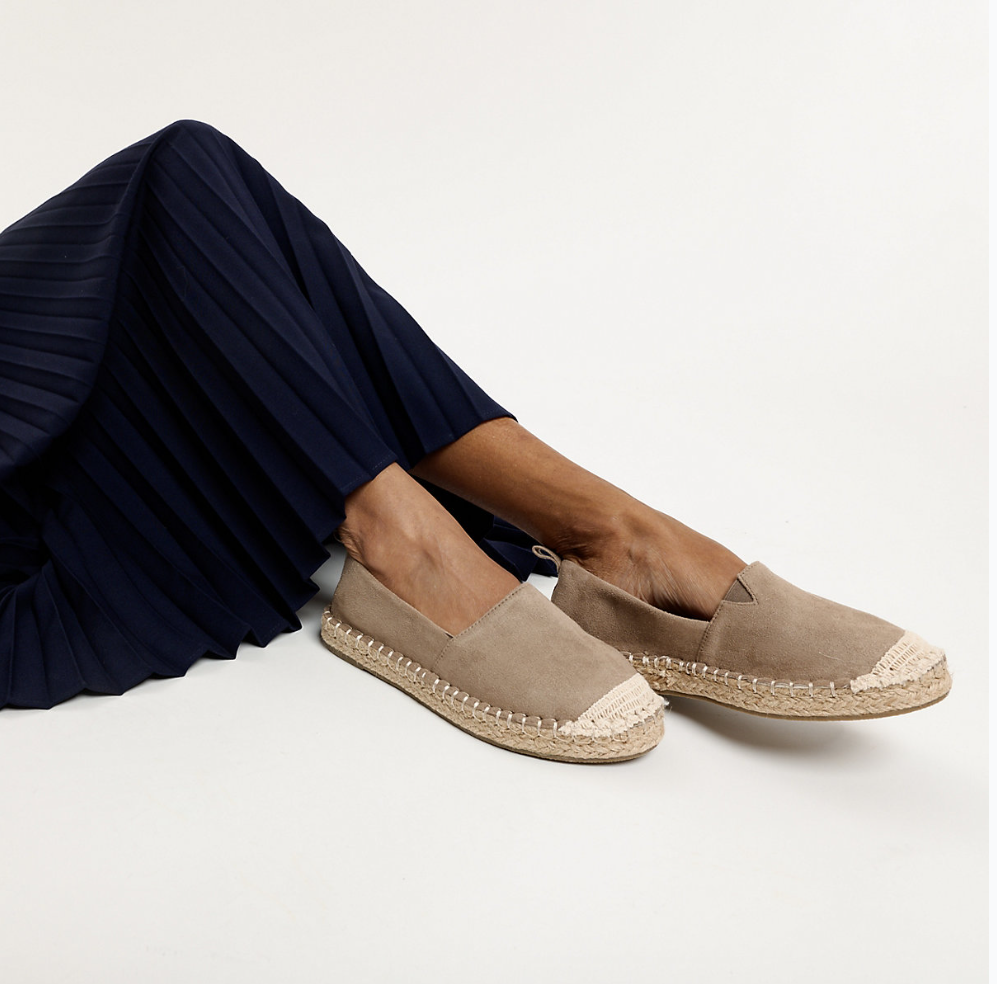
A reference photo is a good starting point, but it is not a production specification. Before asking a custom espadrilles manufacturer for a price, turn the design into a brief covering the components that affect fit, cost and lead time.
At minimum, include the target customer, size range, upper material, lining, insole, outsole construction, colors, logo location, packaging and expected order quantity. A factory can then identify open questions before sample development rather than discovering them after materials have been ordered.
For a classic closed-toe slip-on, the useful decisions include:
- Whether the upper should be denim, canvas, suede, leather or a synthetic alternative.
- Whether the jute should be a visible braided wrap, a full jute sole or a jute-look component paired with a rubber outsole.
- The desired toe shape, heel coverage and collar height.
- The color standard, such as a physical swatch, Pantone reference or approved material cutting.
- The size curve and market-specific sizing system.
- The logo treatment: insole print, woven label, embossing, hangtag or box artwork.
Clear inputs reduce the risk of an attractive first sample that cannot be repeated consistently in production. They also help buyers compare quotations on the same basis.
Choose Materials That Match the Collection’s Use Case
The most recognisable espadrille feature is the rope-like jute look around the sole, but the upper material usually determines the collection’s position in the market. A denim upper, for example, gives a relaxed texture and can support tonal stitching. A suede or microfiber upper creates a softer, more refined appearance. Canvas can suit casual seasonal programs where printed graphics or broader color options matter.
Material selection should balance appearance with the performance expected by the buyer’s market. Ask the supplier how the upper reacts to flexing, surface abrasion, moisture and color transfer. For light colors, request an evaluation of glue marks and edge finishing. For dark denim or dyed textiles, confirm the colorfastness expectations before approving a bulk order.
For the sole, distinguish between the visible jute treatment and the structural outsole. The visual jute wrap gives an espadrille its identity, while the bottom layer determines traction, wear resistance and practical comfort. A private-label brief should state whether the product needs a rubber outsole, a lightweight EVA component, extra cushioning or a specific tread pattern. These details affect tooling, assembly method and the final unit price.
Build a Color Plan That Works Beyond One Hero SKU
Buyers often approve a single blue, black or natural prototype and decide color expansion later. That can slow down the production calendar, particularly when each shade requires a new material source or color confirmation. It is more efficient to discuss the initial color plan while the factory is preparing the sample.
For a core espadrille program, a focused range might include one dark neutral, one light neutral and one seasonal color. A denim program could combine dark denim, light denim, black canvas and a neutral canvas option. This makes the collection easier for a retailer to merchandise while keeping material purchasing and approval manageable.
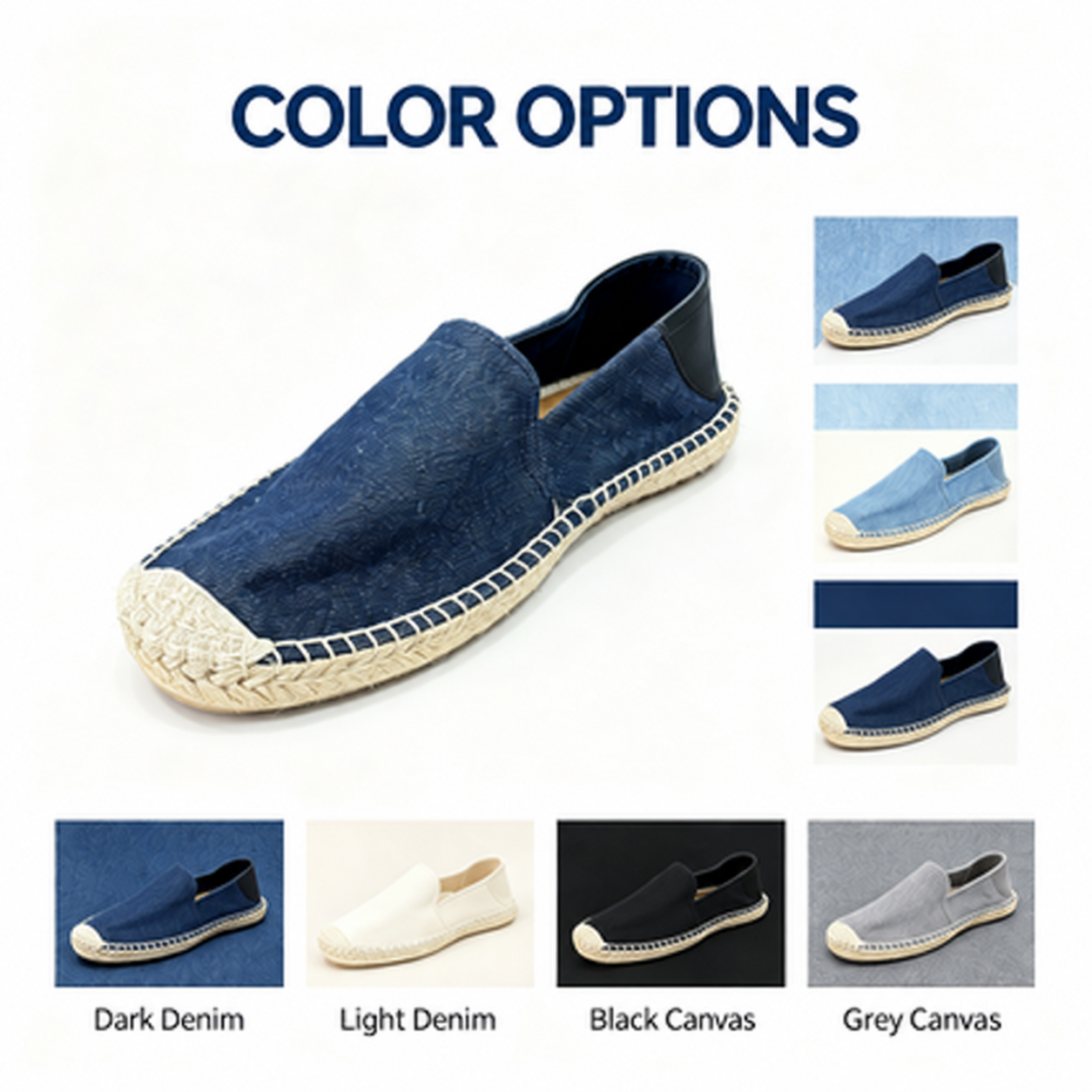
Ask for physical color swatches or material cuttings before bulk production. Screen colors vary, and a product image cannot confirm texture, shade tolerance or how a fabric will look alongside a jute edge. The approved material or color standard should be kept with the production sample and used at final inspection.
Treat Branding as Part of Product Engineering
Private-label espadrilles do not need excessive branding to feel distinctive. A considered insole print, a woven tongue or collar label, a small heel tab and well-designed packaging can be enough. The right choice depends on the material and the brand’s retail price point.
Branding should be specified early because every method has different technical requirements. Embossing needs suitable material thickness. Printing requires a defined artwork file and color reference. Metal hardware changes both cost and assembly. A custom outsole logo may need a mold change. Share vector artwork, size requirements and placement drawings with the factory, then approve the branded sample rather than relying on a digital mock-up alone.
Brands developing an original silhouette can review XuFan’s OEM and ODM footwear services before requesting a sample. For a range built around slip-on shapes, the flat shoes collection is also a relevant internal starting point.
Confirm the Sampling Path Before You Discuss Bulk Production
A good development process separates sample approval from bulk production. The sample stage is where the buyer confirms fit, material feel, color, logo placement and construction details. Bulk production should begin only after those points are documented in an approved sample or specification sheet.
For each sample, record what changed from the original brief. If the factory adjusts the collar height, replaces a material, changes the insole thickness or modifies the jute wrap, note it. Small changes can affect size grading, comfort and the appearance of the finished pair.
When comparing a custom espadrilles manufacturer, ask these questions:
- Which materials are available for the upper, lining, insole and outsole?
- What information is needed to quote a custom color or logo treatment?
- Which items require a new mold, tooling or development charge?
- How will the factory confirm sizing and fit before bulk production?
- What quality checks are used for upper stitching, sole bonding, color and packing?
- Which order details must be finalised before a production date can be confirmed?
These questions are more useful than comparing a headline lead time alone. The right schedule depends on materials, sample revisions, packaging confirmation and the order’s final size and color breakdown.
Plan Packaging for Retail and Freight at the Same Time
Packaging is a customer-facing part of a private-label footwear program, but it also affects shipping volume and product protection. A basic request may be one pair per neutral shoe box with tissue paper. A more developed program can add a logo box, hangtag, size sticker, branded tissue or a carton mark for warehouse handling.
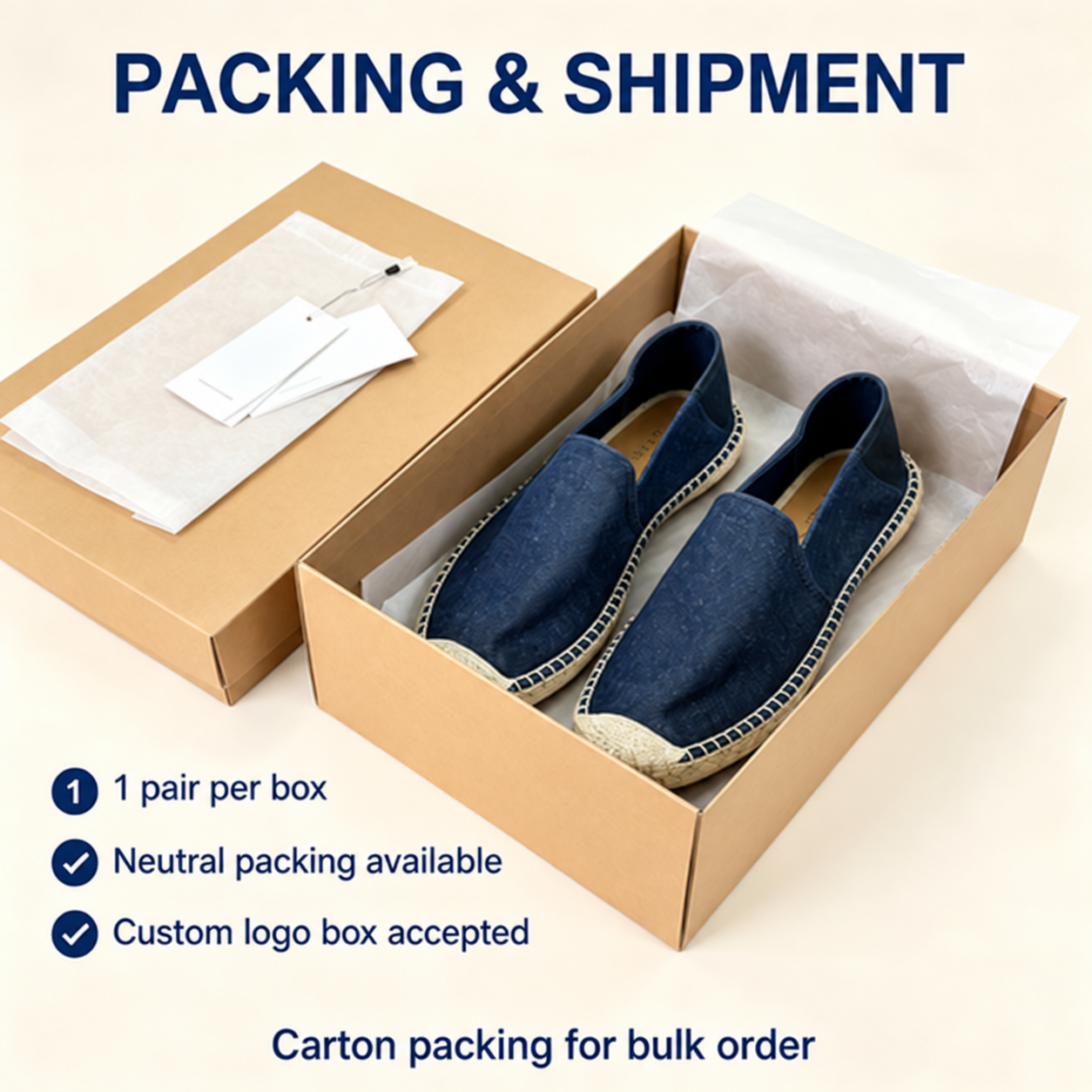
Before approving packaging, request the packed-pair dimensions, carton quantity, carton dimensions and gross weight. That information helps a buyer calculate freight and warehouse costs before the goods are ready to ship. It also prevents a common problem: approving a visually appealing box that is inefficient for carton packing or too weak for international transport.
The factory and quality overview explains the production stages behind a footwear program, from material sourcing through packing. Packaging should be included in that same approval process, not treated as a last-minute artwork task.
A Practical Sourcing Checklist for Private-Label Espadrilles
Before releasing a purchase order, confirm that the following documents and decisions match the approved sample:
- Product specification, including materials and construction.
- Final size range and size curve.
- Approved color standard or material cutting for each SKU.
- Logo artwork, placement and packaging files.
- Price, MOQ and commercial terms for the final order configuration.
- Sample approval record and any agreed changes.
- Packing method, carton information and shipping marks.
- Inspection expectations and a clear quality-claim process.
This checklist may seem routine, but it protects both the brand and the supplier. It keeps the conversation focused on verifiable details instead of assumptions made from a product image.
FAQ: Custom Espadrilles for Brands and Buyers
Can I develop espadrilles from a reference sample?
Yes. A reference sample helps define the silhouette, but the factory will still need a product brief covering material, size range, colors, branding and packaging. The closer the brief is to the intended commercial product, the more reliable the sample and quotation will be.
Which upper materials work well for private-label espadrilles?
Denim, canvas, suede, leather, microfiber and selected synthetic materials can all work, depending on the target price, season and visual direction. The supplier should confirm material availability, performance and finish before sample approval.
Should MOQ and lead time be published as fixed numbers?
No. They are best confirmed against the final design, materials, color count, packaging and order quantity. Publishing a fixed figure that does not match the actual configuration creates avoidable friction for serious buyers.
What is the best next step for a new collection?
Prepare a reference image or tech pack, target market, size range, material preferences, expected quantity and branding needs. Then send the brief to a footwear development team for a sample and quotation discussion.
Develop Your Next Espadrille Collection
Custom espadrilles succeed when the design story and the production details are developed together. The product needs a clear material direction, repeatable color standards, practical packaging and an approval process that gives both the brand and the factory a reliable reference.
XuFan Footwear works with private-label buyers on OEM and ODM footwear projects. To discuss a denim, canvas, suede or custom espadrille program, send your product brief to our team with your reference materials and expected order requirements.