
Suede vs Smooth Leather Loafers: Which Fits Your Collection?
Suede and smooth leather can use the same loafer silhouette and still create very different commercial products. The best choice depends on the brand position, season, customer lifestyle, target price and care expectations.
This comparison helps private-label buyers decide whether suede, smooth leather or a mixed-material range is the better fit for their next loafer collection.
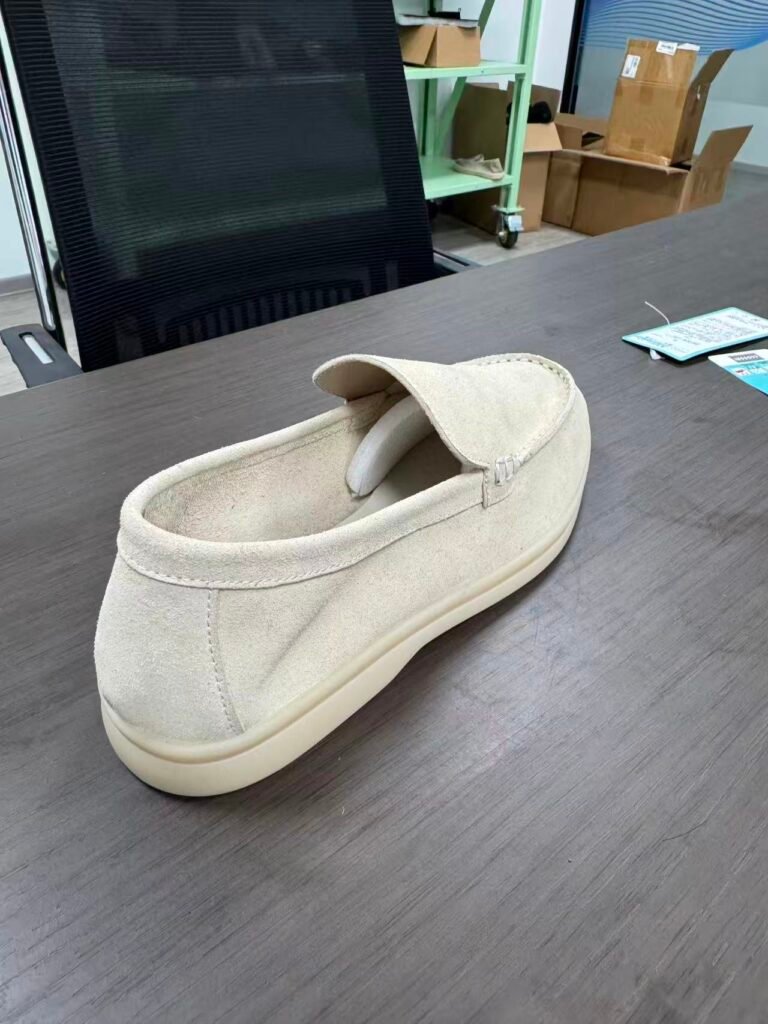
The light beige prototype shown in this article uses a cow suede upper with apron-toe stitching and a cream cupsole. It is a useful example of how natural suede can soften a classic loafer shape and move it toward contemporary casual footwear.
Appearance and Brand Positioning
Suede has a soft, matte surface that gives loafers a relaxed and tactile character. It works well for understated casual collections, resort ranges and premium everyday footwear. Neutral colors can communicate quiet refinement without looking overly formal.
Smooth leather creates a cleaner, sharper appearance. Depending on the finish, it can suit business casual, dress and polished lifestyle collections. It is also easier to combine with hardware such as bits, buckles and metal logo details.
Season and Wearing Occasion
Light suede loafers are often associated with spring and summer styling, while deeper brown, navy and charcoal shades can extend into autumn. Smooth leather is less tied to one season and can serve office, travel and occasion-based collections throughout the year.
For retailers selling across different climates, color and lining choices may be as important as the upper category itself. A lightweight unlined construction serves a different customer from a structured leather-lined loafer.
Target Customer and Sales Channel
Suede often photographs with more visible texture, which can help a product stand out in lifestyle imagery and curated online collections. Smooth leather communicates polish and may be easier for customers to understand when shopping for work or occasion footwear.
Wholesale buyers should also consider how the product will be handled in stores and warehouses. Light suede needs careful display and packing, while some smooth leather finishes may show scratches or creasing. The material choice should match the service level and care information the retailer can provide.
Care and Customer Expectations
Suede usually requires brushing and protection from heavy moisture or staining. Light shades need especially clear care instructions. Smooth leather can often be wiped and polished more easily, although the correct treatment depends on the finish.
Brands should include care information in the box and make sure product descriptions set realistic expectations. This can reduce returns and help customers maintain the intended appearance.
Color Development and Production Consistency
Suede color is influenced by the nap direction and the way light hits the surface. Buyers should approve physical swatches and define shade tolerance carefully. Pair matching must be checked during cutting and final inspection.
Smooth leather can also vary between batches, particularly with natural or transparent finishes. The material approval should identify color, gloss level, grain, thickness and acceptable natural characteristics.
Construction and Design Options
Both materials can support penny, tassel, apron-toe, Venetian and driving-loafer designs. Suede is particularly effective on soft constructions and casual cupsole styles. Smooth leather can support more structured forms and crisp edge finishing.
The outsole changes the message of the product. A slim dress sole feels formal, a rubber-pebble sole suggests driving comfort, and a lightweight cupsole creates a contemporary casual look.
Sampling Risks to Resolve Early
With suede, approve nap direction, pair matching, edge cleanliness and resistance to handling marks. With smooth leather, approve grain character, gloss, creasing behavior and edge finish. For either material, the first prototype should also confirm fit, sole bonding, lining comfort and logo application.
Ask the manufacturer whether changing from suede to smooth leather affects pattern allowance, reinforcement or lasting. The same pattern is not always ready to move between materials without adjustment because thickness and stretch can change the finished fit.
Pricing and MOQ Considerations
Material grade, usable cutting yield, color quantity, lining, outsole and hardware all influence the final price. “Suede” and “leather” are broad categories, so buyers should compare complete specifications rather than assuming one is always more expensive.
At XuFan Footwear, the standard MOQ is generally 500–1,000 pairs per style, depending on materials, outsole requirements, color split and customization. When a collection uses several colors, ask whether material minimums apply per color before confirming the assortment.
Which Material Should Your Brand Choose?
Choose suede when the collection needs softness, texture and a relaxed premium character. Choose smooth leather when easy care, polish and year-round versatility are stronger priorities. A mixed range can also work: the same last and outsole may support suede seasonal colors and smooth leather core colors, subject to technical compatibility.
Before deciding, request physical swatches and one reference sample. Review the shoe with your target customer, retail price and sales channel in mind.
A practical first collection can start with a restrained assortment: one core dark color, one light neutral and one seasonal shade. Keeping the initial range focused simplifies material approval, photography, inventory planning and reorder decisions.
Develop Your Private-Label Loafer Collection
XuFan Footwear supports brands, importers and wholesalers with material selection, custom sampling, private-label branding, quality control and global delivery. Browse our suede loafer manufacturing options and OEM/ODM services.
Tell us your target market, quantity and material preference to start a quotation.