
Custom Suede Loafers: A Private-Label Development Guide
For a footwear brand, a successful loafer starts long before bulk production. The silhouette may look simple, but the commercial result depends on dozens of decisions: upper material, last shape, toe volume, stitching, lining, cushioning, outsole color, branding and packaging.
This guide explains how buyers can develop custom suede loafers for a private-label collection with fewer sample revisions and clearer production standards.
Why Suede Loafers Work for Private-Label Collections
Suede gives a loafer a softer, more relaxed character than polished leather. It works across casual menswear, resort collections, travel footwear and premium everyday ranges. Neutral shades such as sand, taupe, navy and chocolate are easy to merchandise, while seasonal colors can give a familiar silhouette a fresh identity.
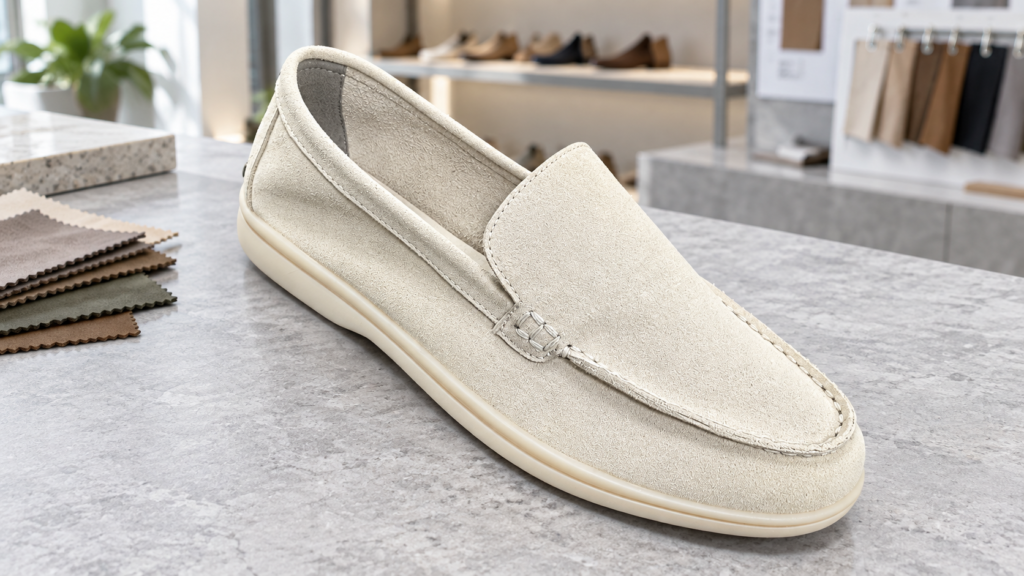
The style shown here combines a light beige cow suede upper, an apron-toe construction and a lightweight cream cupsole. It demonstrates how a traditional slip-on can be adapted into a cleaner, more contemporary casual shoe.
1. Define the Buyer Brief Before Sampling
A useful development brief should explain more than the appearance of the shoe. Before asking a factory for a quotation, specify:
- Target market and customer profile
- Expected retail price and target FOB price
- Upper, lining, insole and outsole material preferences
- Reference size and intended size range
- Required colors and quantity per color
- Logo placement, packaging and labeling requirements
- Target delivery date and destination country
A clear brief allows the manufacturer to recommend realistic materials and construction instead of quoting a product that later needs to be redesigned.
2. Select the Right Cow Suede Specification
This sample uses cow suede, valued for its natural nap, soft hand feel and understated appearance. Cow suede can still vary by hide selection, thickness, finishing and dye lot, so buyers should compare physical swatches under neutral light and check the direction and uniformity of the nap.
For bulk production, the approved material standard should include color, thickness, backing, surface feel and an acceptable shade range. Light colors deserve particular attention because handling marks, uneven nap and adhesive contamination are easier to see.
XuFan can source different upper options for custom suede loafers according to the brand’s price point and market requirements.
3. Confirm the Last, Fit and Heel Hold
A loafer has no laces to compensate for a poor fit. The last therefore controls not only the shape but also the customer’s walking experience. During fitting, check toe room, instep pressure, topline opening and heel slip.
The first sample should be tested on the target customer’s actual size standard. If the collection will be sold in Europe, the United States or Japan, confirm the size conversion table and grading rules before opening a full size run.
4. Approve the Apron-Toe Stitching
The apron seam is one of the most visible details on this style. Buyers should approve stitch density, thread color, seam distance and the shape of the toe line. The left and right shoes should look balanced when placed together.
Ask the factory to keep a signed reference sample. That physical sample becomes the standard for bulk inspection and reduces subjective decisions during production.
5. Match the Outsole to the Collection
A lightweight cupsole makes the loafer feel more casual and can broaden its use beyond traditional dress footwear. Depending on the design, brands may choose rubber, TPR or other compounds. Important approval points include color, flexibility, surface finish, abrasion performance and bonding compatibility with the upper.
For a tonal design, outsole color should be reviewed next to the upper under daylight. Small differences between cream, off-white and beige can noticeably change the finished look.
6. Add Private-Label Branding Carefully
Branding should support the product rather than overwhelm it. Common options include a printed or embossed sock logo, woven size labels, outsole marks, metal details and custom boxes. On a minimal suede loafer, an inside logo or subtle heel detail often preserves the clean appearance.
Confirm artwork size, color, location and application method on the sample. Packaging should also be tested for color transfer and protection during international shipping.
7. Understand MOQ, Sampling and Production Timing
At XuFan Footwear, the standard MOQ is generally 500-1,000 pairs per style, depending on the material, outsole, color split and customization. Trial orders may be discussed for new partnerships.
Typical sampling takes 7-15 days after specifications and materials are confirmed. Bulk production is normally 30-45 days after the final sample, packaging and order details are approved. Custom outsoles, special hardware or newly developed colors may require additional time.
For a complete overview, see our OEM and ODM footwear manufacturing process.
8. Create a Measurable Quality Standard
Before production, convert the approved sample into a written QC checklist. It should cover material shade, surface cleanliness, stitching, symmetry, measurements, logo position, sole bonding, pair matching and packaging.
Light cow suede uppers need careful handling throughout cutting, stitching and assembly. Protective wrapping and clean workstations help reduce avoidable marks. You can also review our approach to footwear quality and materials.
Start Your Custom Suede Loafer Project
XuFan Footwear supports brands, importers and wholesalers with material sourcing, sample development, OEM/ODM production, quality control and worldwide shipping. Send us your reference image, tech pack, target quantity, market and expected delivery date. Our team will review the project and respond with practical development recommendations.